

Making internal alterations / Home Improvements
General Guidance on Alterations Note this is not legal advice but is provided as guidance only. You should consult your lease and/or seek legal advice if you have queries.
If you purchased your flat your legal advisor should have pointed out the contents of your lease which places you under certain obligations (covenants).
One of these obligations is not to make any alterations or additions to your flat “(the Demised Premises”) -this includes, for example, a ban on making any changes to wall and doorway positions. Your landlord has no ability to waive or modify this obligation and cannot give “permission” to make alterations.
All of our flat leases are granted on similar terms. It is a clause of every lease that all other leases on the estate are granted on similar terms. This is standard practice and for a very good reason – it means you (and your lawyer when you buy a flat on the Estate) do not have to read every lease in existence to know/understand. You cannot ask your landlord to change your leases terms in a way that would result in it being granted on terms dissimilar to other flats’ leases – if your landlord did this, they would be acting breach of every other lease they have granted.
There is a recent legal case (6 May 2020) in the Supreme Court (Duval v 11-13 Randolph Crescent Ltd), the details of which in summary means a landlord (i.e. a freeholder) is unable to give consent for alterations where an absolute covenant (prohibition) exists in a lease against it A leaseholder may be liable to all other leaseholders in the development for damages should this “permission” be given.
This means that the landlord can give no permission to allow alterations to flats in the “Berwick Court” development.
No volunteer director is prepared to take the risk to give permission for any alterations. And, no leaseholders should ask them to do so. Remember the directors are also leaseholders and perform their duties on a completely voluntary basis.
Alterations
The lease for your flat prohibits alterations to your flat or to the structure of the building. This means:
- you cannot add extra rooms to your flat (e.g. by subdividing existing rooms into two);
- you cannot take down walls; and
- if you have made alterations you should return your property to its original layout as per the original lease or the landlord may seek to forfeit your lease.
External Apperance of the Buildings
It is a clause of all leases that no one does anything that alters the external appearance of the buildings. This means for example:
- all colours of window frames and types of glass in windows must remain the same;
- you cannot paint your balcony railings any colour except black;
- if you install a new boiler, the flue must the black (see the separate guidance on boiler replacement);
- you cannot attach alarm boxes, satellite dishes or anything else to external walls (note also that you do not own the external walls (or roof/attic above your rooms if you are a top floor flat) and so you will be trespassing if you do anything outside your flat’s demise.
Signs on your windows, walls or railings
- For Sale or For Let signs are not allowed to be attached to the building or a sign put up in your window, or put into the flower beds..
- Similarly, no posters etc can be displayed so as to be visible from outside, e.g. political party notices.
Home Improvements
- Always check the lease for what you can and can’t do.
- Always check with BCML in case you need special approval from the landlord, Coroscoba
Report a Problem
f you are a tenant: the first place to report it to is your letting agents. They may contact your leaseholder for advice or authorisation for a contractor to visit. They or your landlord may contact the managing agents to arrange a contractor to visit.
If you are a leaseholder, the first place to report it to the managing agents. They will advise if this problem is your responsibility of if they need to arrange for a contractor to visit. Always
If there is a problem inside your flat you should report it to your agent (letting agent for tenants; managing agents for leaseholders.
Our managing agents have a Live Chat service which is faster than phoning.
Pests
Mice or Rodents
f you have mice or rodents in your flat, please contact the letting agent or our managing agents, who can arrange for a pest management company to visit your property.
We have rodent traps around the development and in the car parks which are regularly inspected.
Moths
Small balding patches on the corner and the edges of carpets can indicate an infestation of carpet moths. If so, act immediately because it will continue to get worse. A mated female carpet moth can lay around 200 Eggs and infestation can very quickly get out of hand and it’s very difficult to eradicate.
Please inform your letting agent or the managing agents. BCML will arrange for carpet in the communal areas to be treated. But you are responsible for treating any damage to carpets, rugs upholstery or clothing inside your flat.
Foxes
Like most of London, we do have foxes around the development: they tend to shelter in the car parks. Whilst muddy paw prints on your car bodywork can be annoying, and chewed plastic costly or dangerous, there is nothing we can do to prevent them being around. They will run away very quickly if they see or hear you, so there is no need to be frightened of them attacking you.
Please note: It is a criminal offence to do anything to kill or even to main foxes.
Do not install any sound or water deterrents without getting approval of the specification for the item from Warwick Estates
Doors
You own your front door and any balcony doors/glass in your flat and you are responsible for their maintenance and care, including ensuring your front door is compliant with fire regulations.
Balcony and Terrace doors and their glazing/frames are the responsibility of the leaseholder who shall need to organise any repairs or replacement at their own cost/initiative.
The block entrance fire doors are the responsibility of BCML, who organise cleaning of the insides and outsides.
Similarly all communal doors in corridors and at the top of stairs are the responsibility of BCML who arrange the fire door inspections of all fire doors once a quarter.
Landing Windows are cleaned inside and outside and are maintained by BCML
Fire Doors: see the main New Fire Safety Regulations section from the homepage of this website for more detailed information
Fire doors are specialist doors which have been tested against the elements and purpose-built to withstand fires for as long as possible. They enable buildings to compartmentalise and delay the spread of fire from one area to another, and form a crucial part of a passive fire protection strategy.
The Fire Safety (England) Regulations 2022 made it a legal requirement from 23 January 2023 for responsible persons for all multi-occupied residential buildings in England with storeys over 11 metres in height to:
- undertake quarterly checks of all fire doors (including self-closing devices) in the common parts
- undertake – on a best endeavour basis – annual checks of all flat entrance doors (including self-closing devices) that lead onto a building’s common parts
Windows
Under the lease, you are responsible for the glass in your windows.
- You must wash the glass (at least once a month)
- You must repair or replace any broken or damaged glass.
The freeholder owns the seals and window frames, not you.
Window frames are owned by the freeholder and BCML will assist with repairs of these for you with the cost payable by you as part of the proportion of service charge.
If you want to recommend a contractor to work on your windows, please contact the managing agents to discuss this.
The ‘tilt and turn’ windows need to be maintained as well as cleaned:
Quick fix to Unjam Windows
From time to time, the windows in Berwick Court are prone to jam in the open or tilt position. This normally results in the handle also becoming stuck and it appears to be ‘locked’.
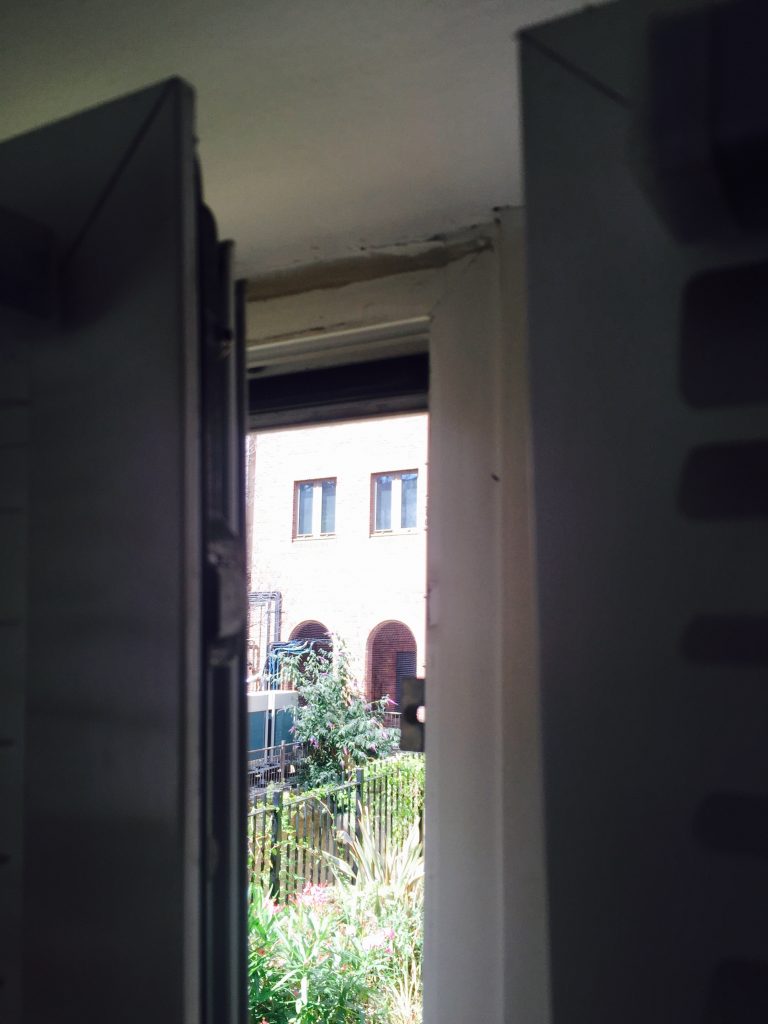
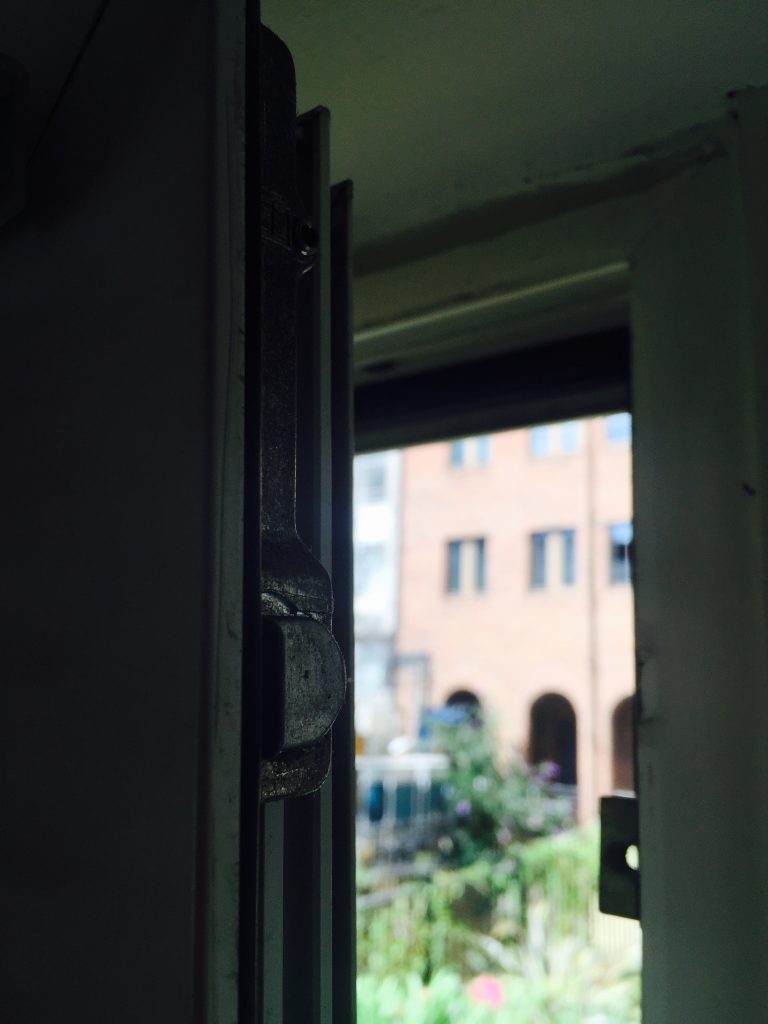
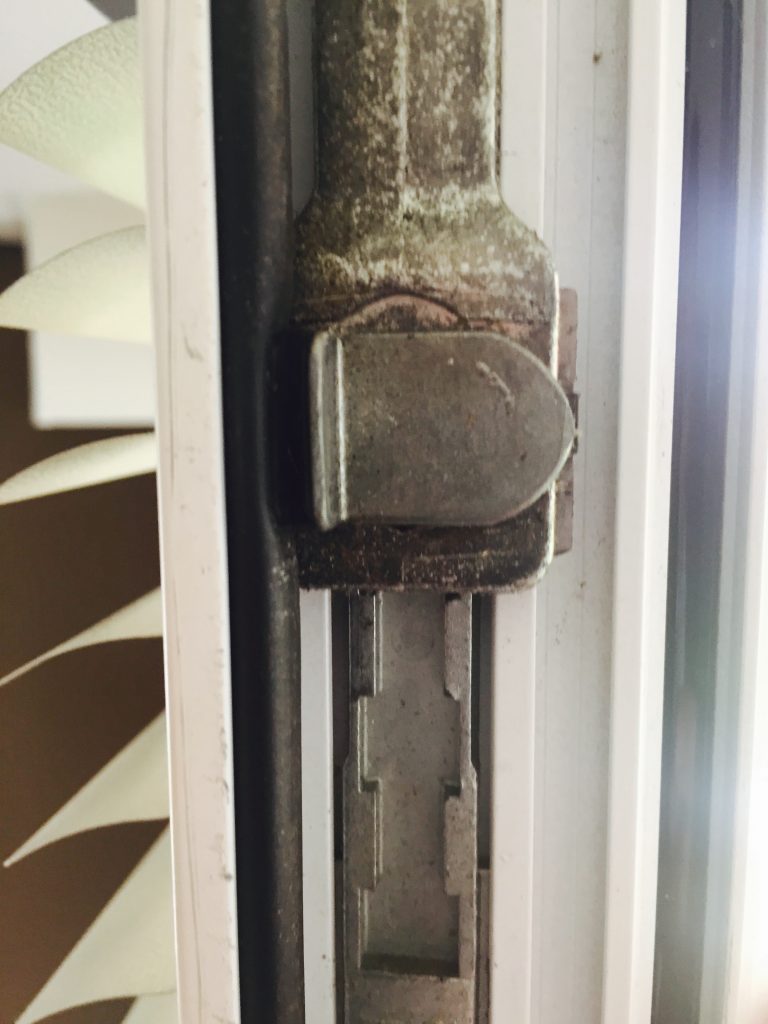
A potential way of fixing this issue is by ‘pinching’ the latch that can be found on the top inner side of the problem window, whilst simultaneously moving the handle. This latch will be on the left or right inside of the depending on which window is the problem.
Once you locate the latch, you ‘pinch’ the latch towards the front of the frame and move the handle. This normally results in the handle to become unlocked and you will be able to move the window into the closed position.
The attached pictures below show where on a window you can find the latch. This example is a left-hand side window.
Balconies and Terraces
- You own the doors to your balcony/terrace and their glass and frames and therefore you are responsible for organising any repairs/replacement at your own cost.
- Any decking/flag stone is owned by you and you are responsible for maintaining it to a safe condition
IMPORTANT: if you want/need to replace any item of your windows or balcony/doors, it is a critical clause of your flat’s lease that any works do not alter the external appearance of the Estate. It is advised to obtain sign-off with any visuals before work starts, as it could be very expensive for you to remedy any breaches afterwards (not only the cost of doing works twice, but you’ll also be liable for the professional fees of lawyers/surveyors/agents in corresponding with you regarding the breach).
If anything you are doing via replacement could impact the structural integrity of the building or its insurance/EWS1 (external walls) certification, you must liaise with BCML’s agents to ensure no part of the building’s structure is compromised. This will include changing the type of decking on your balcony (both in terms of what the structure of the balcony can support and from a regulation point of view the type of material which can be used for decking – see also here for more on upcoming balcony works.)
The structural metalwork of your balcony is owned by the freeholder and maintained by BCML via periodic works – as it will mean putting up scaffolding), these usually take place every 10-15 years. If you want to paint your balcony metalwork at your own cost in the interim, please contact BCML’s agents to discuss this before you do anything.
Ground floor terraces: leaseholders own the flagstones and are responsible for replacing them if they break. They also need to keep the flags free of weeds as part of the general condition of the lease to keep your flat in good repair.
Balconies above bay windows: these flats own their balcony’s flags/flooring material and the drainpipes leading off the balcony as they only serve that flat).
Replacing balcony slats: Leaseholders are responsible for the balcony flooring slats . For fire safety and personal safety reasons, balconies must be maintained in a safe and clean condition.
Material: The material used will need to be A1 /A+ fire rated , in a colour similar to already used, so it’s in keeping with the rest of the building. Please contact our managing agents if you have any queries.
No composite materials should be used as these can give off dangerous fumes and also cause drips of molten material. Acceptable types you can find online, would be Exadack, ceramic fibre, cement, aluminium.
Keys and Fobs
You may have the following keys
- One Suite Key to open both entrance and flat doors
- One flat door Key ( Swallow court)
- Mailbox Keys
- Cycle Cage keys
- Car Park fobs
There may be an additional door key to your flat as some have a secondary lock
Note: All Suite Keys and standard flat door keys are security keys and cannot be cut at high street outlets
Each block, with the exception of Swallow Court has one Suite Key which opens both your block entrance door and your flat door.
If you lose your key or need another key cut, a request must be made in writing/email to the Letting Agent/ Managing Agents to authorise and pass a Works Order to our accredited locksmiths to obtain the key(s) – this will be at your expense.
If your key is lost or stolen you must notify BCML and the Managing Agents/your Letting Agent immediately.
For Swallow Court: this block does not have an entrance lobby, so there are only individual front door keys
If you are a Tenant
If your key is lost or stolen you must notify your Letting Agent, who will contact your landlord for initial approval.
If granted, then the request will go via our Managing Agents as above.
If your key is lost or stolen you must notify BCML and your Letting Agent immediately in case of security issues
Changing or Adding Locks or Spyholes
Even though you own your front door, it is a fire door, and, therefore, you cannot make changes to it without getting approval from your letting agent/the managing agents AND also from BCML.
If you alter a fire door it might not work as it should to keep you and your neighbours safe if there is a fire.
Car Park Fobs
Leaseholders who sell their flats must pass the carpark fobs to the new owners. You cannot keep your carpark space if you are no longer an owner of a flat. You cannot give access to the carpark to anyone else if you do not live on site.
The carpark space is part of your flat’s lease and therefore must be passed on at the sale.
Leaseholders who rent their flat out cannot refuse to provide tenants with a car park fob for them to use that allocated parking space. If the leaseholder does not live on site, they have no right to give access to that space to anyone other than their tenants. Please make sure that the letting agent and BCML directors are aware of who has fobs (a security issue).
Tenants must return any car park fobs to their letting agent along with all other keys.
If you lose a car park fob or want to purchase a new one, please contact our managing agents
Locksmiths / Locks
Your block entrance door key and your flat door key are ‘secure keys’ and need to be authorised by the managing agents. They will then authorise Worral, our locksmith contractor to release these. You will need the code number on the key e.g. WODV 123
Monday-Friday (working hours)
G Worrall & Son – http://www.gworralls.com They do a lot of work around the development, including replacing mailbox keys.
Based 5 minutes away on Great Suffolk Street.
Out of hours Locksmith
Fortress Lock & Safe Co. (recommended by Worralls) +44 (0)20 8674 6657
Click here to send a message via WhatsApp
http://www.fortresslock.co.uk/
N.B. If you want a new door key cut, you must contact the managing agents to authorise, as these are secure keys.
Boilers
Installing new Boilers
Before you start any works or order any new appliances: If you intend to install a new boiler/move over to a combi, please read all of this important information and email BCML.
Options for Replacement Boilers
When replacing the original boiler, you have three main options:
-
- Keep an unvented tank and boiler set-up (e.g. a Megaflo), like originally installed in the flats.
-
- Install a gas combination boiler, removing the tank originally installed in all flats.
-
- Install an electric boiler.
If your boiler is not fixed to an external wall your engineer may need to install inspection hatch
Boiler Size
if your current boiler is inside a kitchen cupboard your new boiler may be larger than the existing one and stick out of the bottom of a kitchen cupboard. Most new gas boilers are bigger than the original ones.
Removing the old System / other large tank
Your contractor must dispose of the old boiler/tank and not leave it on site/in the bin area.
IMPORTANT: Rules when changing or installing a boiler
- The existing flue hole must be used. if you cannot make use of the existing flue created when the flats were constructed, you will need to install a flueless boiler, such as an electric boiler.
- Ask your engineer to install a BLACK flue. Otherwise you may be in breach of your lease.
Important:
You do not own the external wall
- Do not drill through the flat’s external wall to create a new flue opening for the boiler. You do not own this wall and it’s a breach of lease/trespass to pierce it.
- If you do any works to the external wall and/or insert a pipe through the wall, you’ll be in breach of your lease and will be required to remove any work you do and repair the external wall at your cost.
Installing flue-less electric Boiler
If you are in a top floor flat and cannot use the boiler flue from 2000 (which most top floor flats cannot), you will need to install a flueless electric boiler.
You do not own the roof and must not do any works on it to create a new flue – making good the roof will be at your cost if you do anything to it and legal action may be taken against you.
If you are installing an electric boiler to replace a boiler that had a flue, you should tell BCML and leave in situ the existing flue to your boiler through the external wall/mansard roof (outside of your demise) until the next round or roof works/external decorations works are done on your block, so that the roofers/builders can at that point remove it and ensure any remedial works they do leave the building watertight.
If you remove the flue and leave a hole in the building’s external fabric, you will be liable for any damage to the building and the repair costs that BCML incurs to make the building watertight (if this involves scaffolding you will be liable for £1000s of costs).
Installing a boiler condensate pipe (gas combination boilers)
- Any condensate run-off pipe must be connected to the flat’s internal existing water waste pipes.
- See example pictures in Schedule 1 to this note of how to run pipes from a boiler in a kitchen behind the kitchen cabinetry to the sink. Install a pump at the base of the new combi boiler, which periodically pumps the condensate into the kitchen sink drain.
- You cannot run plastic piping across the facade of the building to the drainpipe.
Gas Boiler's emergency overflow
- Ideally, arrange for this to be fed into the waste pipe under your sink.
- If this is not possible for you, in advance of starting work approach the freeholder (Coroscoba Limited) and ask if it will grant you permission to install a small copper pipe through the external wall. This is at the freeholder’s discretion and if permitted you will be required to sign a written agreement in relation to any approved works.
- Any works undertaken without an agreement with the freeholder is a breach of your lease/trespass and you may be required to remove any work you do.
- If permission is not granted, you will need to install an electric boiler or find a solution to route the overflow pipe into the flat’s internal waste water pipes.
Questions?
In the first instance and to avoid being in breach of lease (or the need for costly remedial repair works needed to make the external fabric of the buildings watertight again), contact the managing agent or your letting agent.
If you have questions re. flues or installing an overflow pipe through the external wall, you should contact the agent for the freeholder (Coroscoba Limited) as it owns the wall/roof. This includes if you are replacing a gas boiler with an electric boiler and are concerned that the flue for the boiler is not watertight and leaving it in situ could cause leaks into the building.
We cannot emphasise enough that while it is understood that sometimes boiler works need to be done in emergency circumstances, you must not do works outside your demise (though external walls and the roof) without the express consent of the freeholder.
Contact: Berwick Court Management Limited (BCML) and the managing agent/your letting agent.
If you need a boiler works agreement for a copper boiler overflow pipe, or are planning to remove a boiler and replace it with one that does not have a flue thus leaving holes in the external wall/mansard roof, this affects property that the landlord owns Contact the current managing agent for Coroscoba Ltd