
meters
The gas meter is usually somewhere inside your flat- anywhere from in a kitchen cupboard to inside a wardrobe! If you live in Kittiwake, when you’ll find them in the car park – email us to get a key).
The electricity meter is usually in the hallway cupboard outside your flat. Each meter will have the flat number written underneath it.
To open the cupboard you will need a T-Key. They cost about £4.00 from Amazon or a hardware shop
Please remember to lock the door after use. It is Fire Door
Water meters
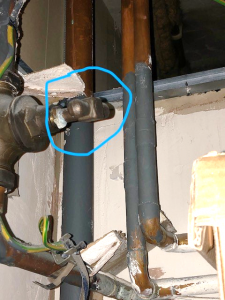
We do not measure nor charge for water usage in individual flats. The water charges for the development are currently included in the Service Charge.
Smart meters
As part of the installation, the utility provider’s engineer will need access to the basement electricity room (to switch off your flat’s power). This room is locked and only accessible by BCML.
It is important that you contact BCML or our Managing Agents SOME DAYS BEFORE you arrange an installation, otherwise you may not get access to the main electrical room.
Our caretaker is usually on site Monday-Friday, 7.30 am-3.30 pm and he can be given keys to provide access to the electricity room if you arrange this with us in advance – so get in touch and we can arrange to help you.
There may be some variations to the hours and days mentioned above, so you need to make an appointment with both BCML berwickcourtdirectors@gmail.com and with your utility company, in order for the installation to succeed without a hiccup (the utility company will leave if they can’t get access to the cupboard and you may be charged for a failed visit).
If you call Warwick Estates only on the day of your appointment, or once the engineer has arrived at your flat, it’s quite possible that you won’t be able to access the room if no-one is available on site.
Water Leaks
You are responsible for maintaining the plumbing within your flat and any plumbing which serves only your flat. Check grouting and mastic seals for cracks and investigate any signs of damp promptly.
If water leaks from your flat into another flat or the communal area and causes damage, while there is buildings insurance there is a substantial excess and you will be liable to pay this amount (and any other costs which aren’t covered by insurance, resulting from leaks from your property).
If you have damp stains on your ceiling, contact your Letting Agent or our Managing Agent so they can help you liaise with your neighbours and organise a plumber.
Turning your water off if you are on holiday
Can we please remind residents to turn their water off at the stopcock if you are going on holiday/going to be away for more than a couple of days.
We’ve seen a number of water leaks while people were on holiday/on extended leave. Turning the water off will prevent considerable damage in the period between identifying where the leak is coming from (typically when a flat sees water damage) and contacting the owner (water leaks can travel downwards through multiple floors and sideways).
To turn off the water to your flat, turn the stopcock, which is usually located in the corridor cupboard in your flat, where the hot water tank is/used to be.
The stop cock is typically in the hallway cupboard where your hot water tank is/was.
ATTENTION: when turning the water back on, do not turn the tap fully on – this will cause drips – always leave it a quarter turn towards off
If your stopcock is not turning freely, do NOT use WD40; use a penetrating or lubricating oil
Water leaks also underline the importance of us having telephone and email contact details for everyone, so that we can contact you if there has been in a leak in or into your property.
You might also want to consider leaving keys with a trusted friend/family member/neighbour who can open up your flat to allow drying out This can avoid an insurance assessor arguing that unrecoverable damage was caused because you didn’t provide BCML with a way to contact you, and so the standing water was left in your property for a long time.
Toilet Cistern Leaks
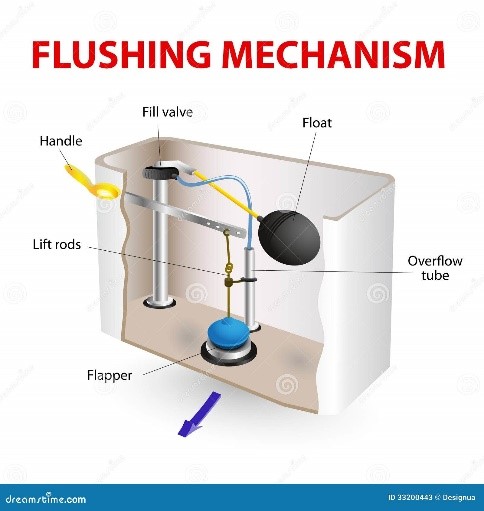
A large number of leaks in recent years are caused by the ball valve in the cistern not working as it should. Over time, the pipes and the ball valve fur up. So, when you flush, the mechanisms cannot work and the ball valve does not stop before the cistern overflows. The overflow installed just goes onto your bathroom floor and causes leaks into the flat below.
Toilet Cisterns
The toilet flushing system is made up of two separate and independent parts: (see diagram on the left)
A filling mechanism comprising:
- A shut-off valve: This allows you to turn the water off if you need to make repairs (not shown).
- A float valve (also known as the ball cock): This controls the level of water in the cistern. The float valve shuts off the water when the cistern is filled to the desired
So, when the flush valve and levers get coated with limescale and stop working properly, there is nothing controlling the water to stop filling up and it overflows around the cistern and into cupboard under the cistern/washbasin.
What should happen is that overflowing water from the cistern runs into the toilet bowl, but our original plumbing left the water to run out under the bath through a small pipe connected to nowhere!
If you have a leak, probably the first you may know about it is when your neighbour below starts complaining of water leaking through the ceiling.
The easiest solution to this problem is to get a self-bailing flush valve installed to stop this problem before it starts. It is a quick and inexpensive process.
Bathroom
If you are thinking of refurbishing your bathrooms, make sure you do not tile-in access to the cistern. If there is a leak into or from your bathroom the tiles will need be broken to remove them in order to get to the pipes behind.